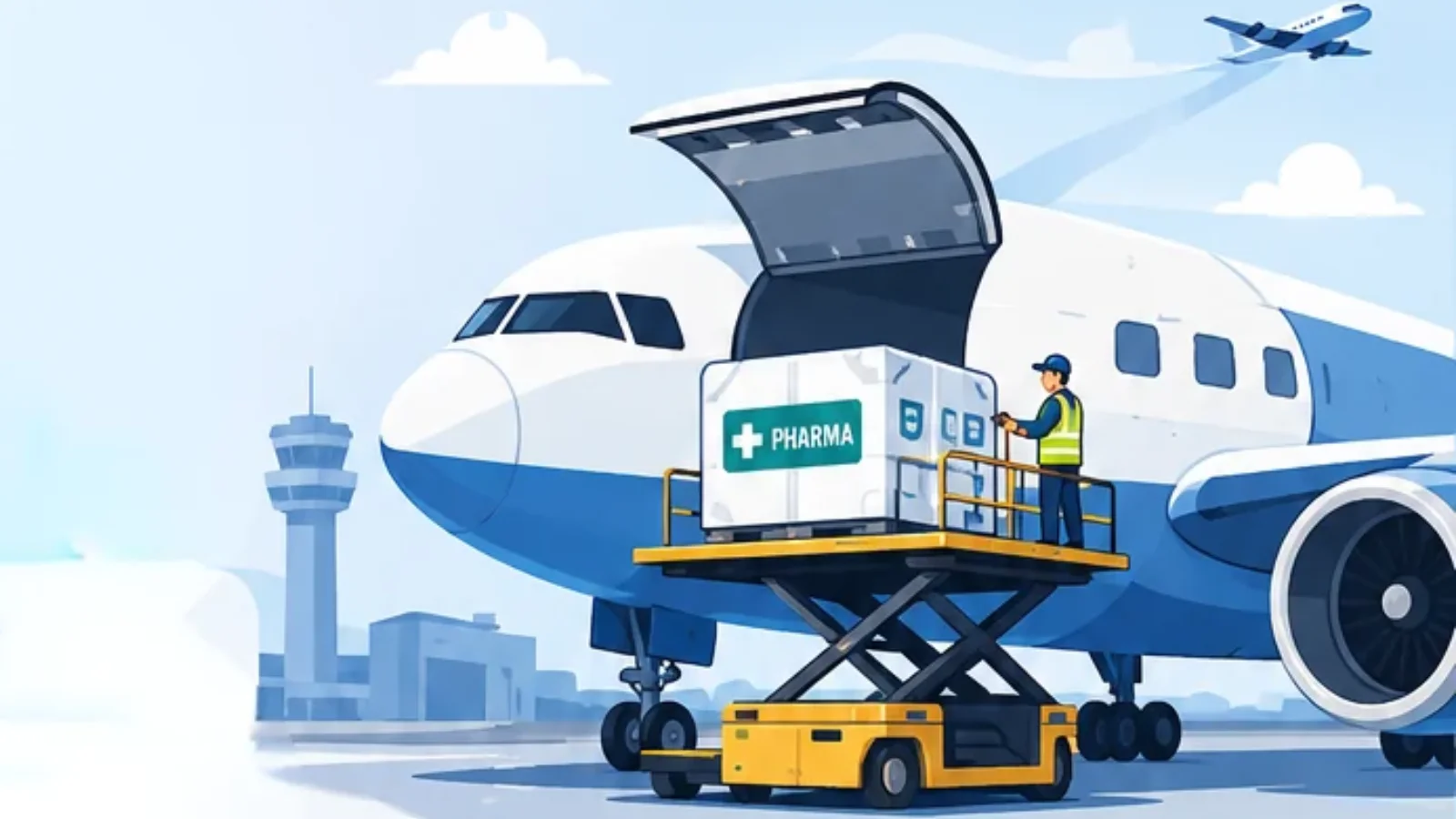
A vial of insulin, a cancer biologic, a batch of vaccines. Each can travel thousands of kilometres in under a day, but only if it never leaves its safe temperature range. Air freight is the fastest way to move medicines across the world, and also one of the most demanding. At PDS International, we understand that every pharmaceutical shipment carries a patient's trust. Here is how the pharmaceutical air cargo chain works and why it takes far more than a seat on a plane.
Why Pharmaceuticals Travel by Air
Many medicines are high-value, time-critical or both. Biologics, vaccines, blood products and clinical trial samples can lose potency within hours of exposure to the wrong temperature. Ocean freight can take weeks, and that is often too long. Air freight shortens transit time, reduces the number of handovers and gives shippers a predictable schedule.
Understanding the Temperature Ranges
Not every pharmaceutical needs the same conditions. Most shipments fall into one of these categories:
- Controlled room temperature (15°C to 25°C): Common for tablets and many standard medicines.
- Refrigerated (2°C to 8°C): The most common cold chain range, used for vaccines, insulin and many biologics.
- Frozen (-20°C): Used for certain biologics and plasma-derived products.
- Ultra-cold (-60°C to -80°C or colder): Reserved for specialised therapies such as some mRNA vaccines and cell and gene treatments.
Each range needs different packaging, handling and monitoring, which is why planning starts well before the cargo reaches the airport.
Packaging: The First Line of Defence
Packaging does the heavy lifting between the warehouse and the aircraft hold. There are two main approaches:
- Passive packaging: Insulated boxes or shippers combined with gel packs, phase change materials or dry ice. They need no power and are validated to hold a temperature for a set number of hours.
- Active containers: Powered units with built-in refrigeration or heating that actively regulate the internal temperature. They suit longer journeys, larger volumes or very strict requirements.
The right choice depends on the product, the route, the season and how long the shipment may sit on the ground.
Monitoring: Data You Can Trust
Modern pharma shipments rarely travel unwatched. Data loggers record temperature throughout the journey, and many shippers use real-time trackers that report location and conditions. If something drifts out of range, teams can intervene early. After delivery, the recorded data supports quality checks and regulatory documentation, which matters when a single excursion can put a whole batch in question.
The Hidden Risk: Time on the Ground
The flight itself is usually the most stable part of the journey. The greater risk is on the ground: waiting on a hot tarmac, sitting in a warehouse during a delay or being handled by staff unfamiliar with pharma requirements. This is why experienced forwarders focus on tight handovers, priority handling and pre-booked cold storage at transit points.
Regulations and Standards
Pharmaceutical logistics is closely regulated. Key frameworks include:
- Good Distribution Practice (GDP): Guidelines that keep medicines' quality and integrity intact throughout the supply chain.
- IATA CEIV Pharma certification: An industry certification that airlines, handlers and forwarders can earn by demonstrating consistent pharma-handling standards.
- Local import and export requirements: Customs rules, licences and documentation vary by country and can cause delays if they are incomplete.
Working with partners that hold relevant certifications reduces risk and makes audits much easier.
Best Practices for Shippers
- Plan the whole route. Map every handover, from pickup to final delivery, and identify the weak points.
- Validate your packaging. Test it against realistic conditions, including delays and seasonal extremes.
- Prepare documentation early. Missing paperwork is a common cause of customs holds.
- Choose direct or fewer-stop routes. Fewer transfers mean fewer chances for temperature excursions.
- Have a contingency plan. Know who acts, and how, if a delay or excursion occurs.
- Choose specialised partners. Experience with pharma cargo matters more than a low rate.
Moving pharmaceuticals by air is a
coordinated effort between packaging, technology, trained people and
regulation. When it works, nobody notices: a patient simply receives a medicine
that is as safe and effective as the day it was made. For shippers, that
invisible reliability is exactly what good cold chain logistics delivers.
How PDS International Supports Pharmaceutical Shippers
Pharmaceutical shipments leave no room for guesswork. PDS International works with manufacturers, exporters and importers to plan air freight movements that protect product integrity from pickup to delivery. Our approach centres on:
- Route planning that reduces transfers and ground time
- Temperature-appropriate packaging and handling matched to your product
- Documentation support to help avoid customs delays
- Proactive communication so you know where your cargo is and how it is performing
Ready to Ship Temperature-Sensitive Cargo?
Talk to the PDS International team about your next pharmaceutical shipment. Tell us your product, temperature range and destination, and we will help you build a plan that keeps it safe and on schedule.